Nov 02, 2026
If you exercise every morning, stopping because of bladder leaks might not sit right. But what if you don’t have to stop? You might just need a beginner-friendly pelvic floor routine to help manage leaks and dribbles, so you can carry on in your fitness journey.
Let’s explore safe ways you can exercise comfortably while managing bladder leaks.
Why a Bladder-Friendly Approach to Exercise Matters
Exercising with bladder leaks could be frustrating. You might be in the middle of a run or squat and suddenly feel a leak.
Sometimes, it could even be an urge to pee you can't control between sets.
Depending on whether your pelvic floor is weak or too tight, you might need a different workout routine.1
Or maybe you just need a gentle starting point, but everyone's needs are different. And that’s why you need to check with a doctor before starting anything new.
Warm Up Before You Move
Warming up before any exercise could help with strains, and your pelvic floor is no different.2
To warm up your pelvic floor:3
- Lie down on your back with your legs bent.
- Alternate between fast Kegels and slow ones you hold for three seconds.
- Then, stand up with your feet facing outward.
- Stand on your toes and squeeze those same muscles before releasing your pelvic floor.
Your Beginner Pelvic Floor Routine, Step-by-Step
You don’t need to start pelvic floor exercises straight off the bat. You could start small, easing into the exercise over a few weeks.
Let’s look at how you could build your routine over time.
Weeks 1 to 2, Finding and Activating Your Pelvic Floor
Start by finding the right muscles. To do that, imagine holding in gas.1 It could also help to try stopping your pee midway, but it isn’t something you should make a habit of.1
Kegels feel like you’re gently drawing up your muscles.4 You don’t want to use your inner thighs, butt, or stomach.4
It might be tempting to do more or change positions, but take it easy. Since you are just starting, you might want to focus on getting your muscles right with a few reps in, while lying down.4
Weeks 3 to 4, Building Strength with Bridges
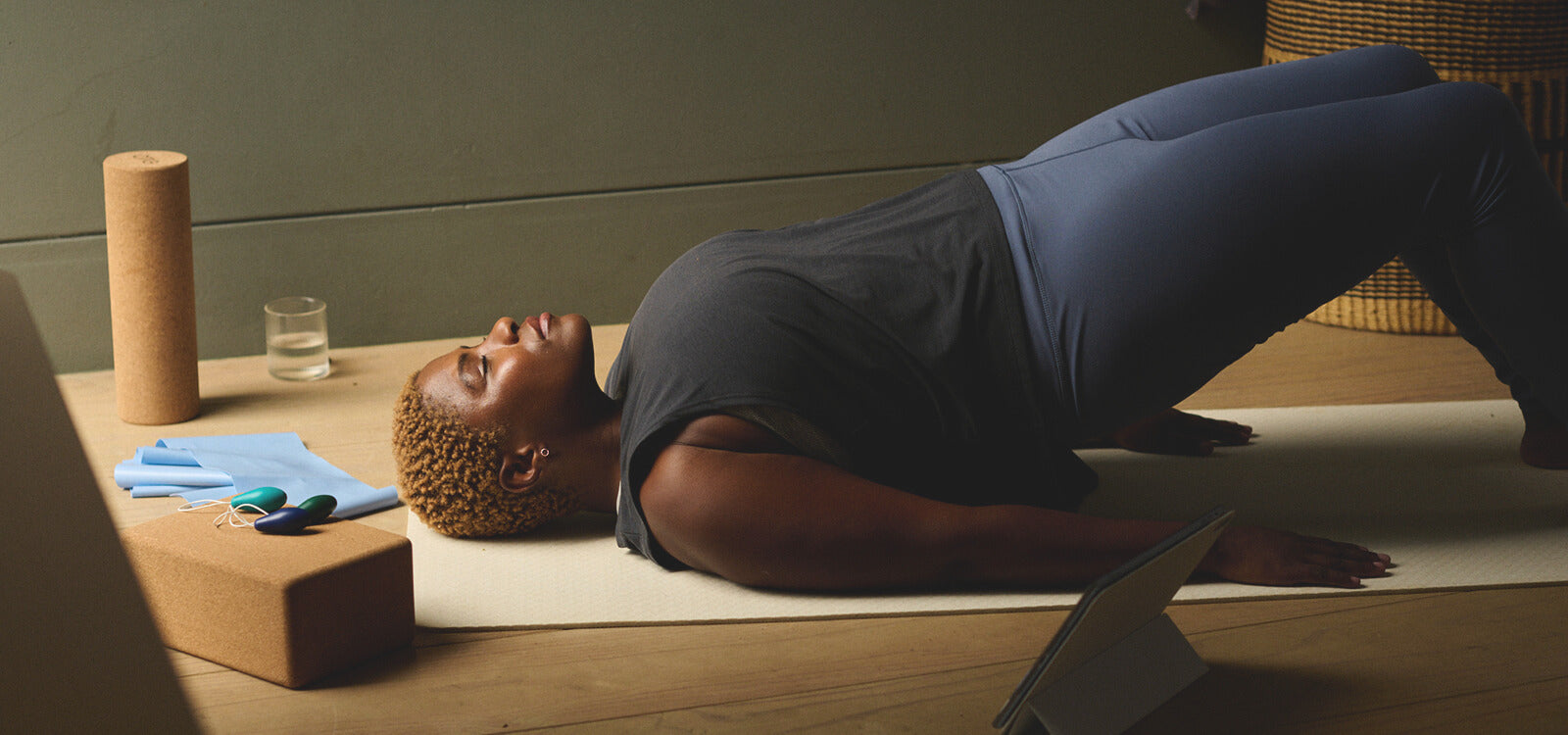
Once you’re comfortable with Kegels, you can add pelvic floor exercises like bridges.
To start:5
- Lie on your back with your knees bent.
- Keep your feet flat on the ground, with your legs hip-width apart.
- Rest your arms by your sides with your palms facing down.
- Squeeze your pelvic floor and buttocks as you raise your pelvis into the air.
- Hold for 3 to 8 seconds, then relax both and lower your pelvis to the ground.
Try this 10 times for two extra sets.5 But if you feel uncomfortable, you don’t have to power through; take a pause.
Progressing Safely as You Get Stronger
Once you are comfortable with your reps and feel your pelvic floor is stronger, you could add in more reps to your bridges and Kegels.4,5
At that point, you could even do Kegels standing, but don’t rush yourself.4
It may be frustrating not to see immediate changes, but like with any muscle, your pelvic floor could take weeks to feel stronger.4 Keep going; it's normal for progress to feel slow or stalled.
Low-Impact Movement That's Easy on Your Bladder
You might need to wait for a few months of regular pelvic floor exercise before going back to activities such as:5
- Heavy lifting
- Sit-ups with your legs raised
- Double leg lifts
- Running
- Jumping
These could weaken your pelvic floor and worsen bladder leaks.5 But if you absolutely must do them, you might need to modify them.6 For example, when lifting weights, engage your pelvic floor and use lighter weights.6
If you decide to wait, there are several low-impact movements you could try; they include:6
- Biking
- Hiking
- Walking
- Swimming
Staying Comfortable and Confident While You Exercise
Even as you build your pelvic floor strength slowly, leaks could happen. Using the right incontinence products could help you stay focused on your goal and comfort during your workout.
If you’re unsure about which product to grab off the shelf, TENA has a wide selection that could help.
Both men's and women's incontinence products are designed to fit your anatomy with maximum comfort even when bending, stretching, or on the move.
Signs You Should Pause and Talk to a Doctor
Pelvic floor exercises like Kegels are low-impact workouts for bladder leaks. You may not feel 100% comfortable doing them at first, but we recommend talking to your doctor if you notice pain.1
Also, let them know if it’s been a while and you still haven't noticed any changes.
It may feel embarrassing opening up about urinary issues, but your doctor is trained to guide you professionally through it.
Pace Yourself, Strengthen Your Pelvic Floor
So, do you have to stop running every weekend? Maybe for a while, until your pelvic floor feels stronger.5
For now, try a bladder-safe workout plan. Start by pacing yourself with exercises like Kegels, but don’t forget to warm up first.3 Once you are comfortable, you could move to more strengthening exercises like bridges.
Staying active with bladder leaks is a step-by-step process. You don’t have to stop exercising completely; you could pick up a low-impact activity like biking or hiking instead.6
And when bladder leaks show up during your exercise routine, the right incontinence product could help you keep going.
Remember, changes come with consistency, but if you’re in pain, you should see your doctor.1
FAQs
How Long Does It Take to See Results from a Beginner Pelvic Floor Routine?
Everyone's experiences are different. Pelvic floor exercises could take weeks before you see changes.4
What matters more than quick progress is showing up consistently with a gentle routine.4
Can I Do Pelvic Floor Exercises Every Day?
When you're starting out, try short daily sessions that feel easy.4 Listen to your body; it will tell you when you need a break.
You might feel some discomfort at first, but if you notice pain or more leaks, we recommend talking to your doctor.1
What Is the Safest Way to Start Exercising with Bladder Leaks?
Taking it slow with exercise is a good approach. Warm up before your workouts, try the gentle moves first, and then gradually move to more advanced ones over the coming weeks.
Trust your body; it will tell you when it's too much. It might also help to use comfortable and reliable incontinence products. They could help you feel confident and in control.
Should I Wear a Pad or Liner While Exercising?
You might find it reassuring to wear a light pad, liner or shield while working out with light bladder leakage.
It's a personal choice for comfort, and there's no need to feel embarrassed.
When choosing an incontinence product, choose one designed for active days. That way, you can stay focused, especially in the early weeks, instead of worrying about leaks.
Can High-Impact Exercise Make Bladder Leaks Worse?
Yes, they could. Exercises like jumping or running could put more pressure on the bladder and pelvic floor, which may make leaks more noticeable.6
You don’t need to stop them forever, just until your pelvic floor gets stronger.5 For now, try low-impact movements like walking.6
If you’re unsure about whether your pelvic floor is ready for high-impact exercise, you should talk to your doctor.
Do I Need Special Equipment for a Pelvic Floor Routine?
No, you don’t need any special equipment to get started. You can do beginner-friendly moves like bridges using only your body weight. As the weeks roll by, you could add light weights, but it’s not a requirement.
What If I Can't Find My Pelvic Floor Muscles?
There’s nothing wrong if you can’t. You could try imagining holding in gas or stopping your pee mid-flow.1
It might take time and practice to get it right and feel confident. But if it still feels tricky after a few sessions, you should see your doctor.
When Should I See a Doctor About Bladder Leaks During Exercise?
Check in with your doctor if you notice pain or more leaks during your workout.
Also, tell them about any new or unusual symptoms, or any new routine. They could make sure it's a good fit for you.
Can Men Benefit from a Bladder-Friendly Exercise Routine Too?
Yes. Both men and women use their pelvic floor muscles for bladder control.4 That’s why a gentle, beginner-friendly routine may help anyone noticing leaks.
The pacing and warm-up principles in this guide apply to everyone looking to strengthen their pelvic floor.
Remember, check with your doctor first, especially if leaks are new or unexplained.
How Is a Beginner Pelvic Floor Routine Different from Bladder Training?
A pelvic floor routine helps strengthen the muscles that support your bladder through targeted pelvic exercises.1
Bladder training is different. It involves things like following a bathroom schedule to gradually increase the time between your visits.7
It might be more supportive to combine both strategies.7
References
1. Mitchell K, Greenwood BG. What are Kegels, and why should I do them? [Internet]. WebMD. 2026 May [cited 2026 Aug 19]. Available from: https://www.webmd.com/women/kegels-should-i-do-them
2. Cleveland Clinic. Muscle strains: Causes, symptoms, treatment & FAQs [Internet]. Cleveland Clinic. 2025 Jan [cited 2026 Aug 19]. Available from: https://my.clevelandclinic.org/health/diseases/22336-muscle-strains
3. De Carvalho ML a. S, Bezerra LO, Oliveira JMP, Oliveira MCE, Micussi MT a. BC. Pelvic floor muscle training in women with urinary incontinence and pelvic organ prolapse: A protocol study. PLoS ONE [Internet]. 2024 Aug 16;19(8):e0308701. Available from: https://doi.org/10.1371/journal.pone.0308701
4. Cleveland Clinic. Kegel exercises: How to and benefits [Internet]. Cleveland Clinic. 2023 Feb [cited 2026 Aug 19]. Available from: https://my.clevelandclinic.org/health/articles/14611-kegel-exercises
5. Nall R. Pelvic floor exercises: The best exercises for men and women [Internet]. www.medicalnewstoday.com. 2026 Mar [cited 2026 Aug 19]. Available from: https://www.medicalnewstoday.com/articles/322720#bridge
6. Werner C. Potential exercise challenges and tips for overactive bladder [Internet]. Healthline. Healthline Media; 2026 [cited 2026 Aug 19]. Available from: https://www.healthline.com/health/exercise-tips-for-overactive-bladder#exercise-tips-for-oab
7. Watson S. Bladder training [Internet]. WebMD. 2025 [cited 2026 Aug 20]. Available from: https://www.webmd.com/urinary-incontinence-oab/bladder-training-techniques