Aug 06, 2025
“How long does menopause last?” A question most women ask, and for many, it may feel a bit unsettling starting a journey without a specific end in mind.
The answer actually depends on which stage you are referring to. Menopause has three stages: perimenopause, menopause, and postmenopause.1
Each stage has its own timeline, and symptoms that could continue across them.1,2
Understanding which stage of menopause you’re in could help you know what to expect, and how to manage symptoms as they happen.
When Does Menopause Usually Start?
Your menopause timeline begins with perimenopause, which most women enter in their mid-to-late 40s.3 On average, it starts at around 47 years and ends when menopause happens between 45 and 55 years.4,5
You reach menopause after 12 consecutive months without a period.1 For US women, this may be around 52 years.5
Some women may notice symptoms earlier, sometimes in their late 30s.3 This may be due to early menopause, which happens before age 45, or premature ovarian insufficiency (POI), which occurs before age 40.1
Several factors may affect when menopause begins. Our article on when menopause starts can help you understand what to expect.
What Are the Stages of Menopause and How Long Does Each Last?
Menopause happens in three stages, each with its own timeline and symptoms.1,2 Here is how they differ.
Perimenopause
Perimenopause is the stage when estrogen and progesterone begin to fluctuate and gradually decline.1,6
It usually lasts four to eight years, but for some women it may be shorter or lasts up to 10 years.4
Symptoms often become more noticeable in the final one to two years, when estrogen levels drop more sharply.7
Bladder leaks and urgency may also show up because lower estrogen levels could affect your bladder and urethra.8
Some common symptoms during perimenopause include:7
- Irregular periods
- Hot flashes
- Night sweats
- Trouble sleeping
- Mood swings
- Brain fog
- Vaginal dryness
- Lower sex drive
Menopause
Menopause is a moment rather than a phase; it does not have a duration.1
It is a single point in time that shows up after 12 consecutive months without a period.1 After this moment, postmenopause begins.1
The symptoms people often connect with menopause usually begin earlier, during perimenopause.6,8 Some improve after menopause, while others may continue into postmenopause.6
Postmenopause
Postmenopause is the period after menopause, and it lasts for the rest of a woman’s life.1
During this stage, symptoms like hot flashes and night sweats could still show up.9 These symptoms usually ease in 7 to 10 years; it could be shorter for some women, easing within a year, but for 1 in 7 women it could persist longer.9
Some symptoms such as vaginal dryness, urinary tract infections, and urinary urgency may persist during postmenopause as well.10,11 These symptoms may be worth talking to your doctor about, along with your bone and heart health.10,11
It might feel like a lot, but you don’t just have to live with these changes. Your doctor could help you effectively manage symptoms.
Factors That Affect How Long Menopause Symptoms Last
There are some factors which could affect both how long your symptoms last, and your own menopause timeline. They include:
Age at onset: Women who began perimenopause earlier might stay in this stage longer.4
Genetics: Family history could play a big role in when menopause starts.12 For example, if your mother started menopause earlier, you might experience something similar.12
Smoking: Smoking may make symptoms like hot flashes last longer, and it may also cause menopause to show up earlier.13
Stress and mental health: High levels of chronic stress, depression, and anxiety may make menopause symptoms last longer.13
Body weight: Higher body weight may make hot flashes and night sweats last longer, while very low body weight may cause early menopause.12,13
Signs of Premature Menopause and What to Do About It
We’ve mentioned early menopause and premature ovarian insufficiency (POI) briefly. So, let’s look at the differences.
POI happens when your ovaries stop working as usual before the age of 40, causing irregular or absent periods.14
Remember, although your periods might not be regular, you could still get pregnant.14
Early menopause, on the other hand, means menopause happens earlier than usual, between the ages of 40 and 45.14
POI is less common than early menopause. It affects around 1 in 100 women under 40, while early menopause affects about 5% of women.15,16
Some signs you might have POI include:14
- Hot flashes
- Night sweats
- Mood changes
- Vaginal dryness
- Irregular or missed period
If you notice these signs of menopause before 40, you should consult a doctor, because POI could expose you to a long period of low estrogen levels, affecting your bone, heart, and brain health.14,15
Your doctor might order blood tests to check your Follicle-Stimulating Hormone, AKA FSH, levels four weeks apart, among others, to help rule out POI.14,17
If you have POI, your doctor might suggest hormone replacement therapy to help manage symptoms at least until you reach the natural age of menopause.14,15
Taking Care of Yourself Through the Stages of Menopause
Supporting yourself through menopause may look different in each stage. Every stage has its own needs, so let’s look at how you could make each one feel a little easier.
During Perimenopause
It might be helpful to focus on habits that could make the transition feel easier, such as:
- Drinking less caffeine and alcohol to help reduce hot flushes.2
- Staying active with aerobic or weight-bearing exercise for menopause to help support bone health.10
- Starting pelvic floor exercises to help strengthen your pelvic muscles as estrogen declines.8
- Speaking to your doctor about options like hormone replacement therapy if symptoms start affecting your quality of life.
- Retrain your bladder gradually, with bladder training techniques.
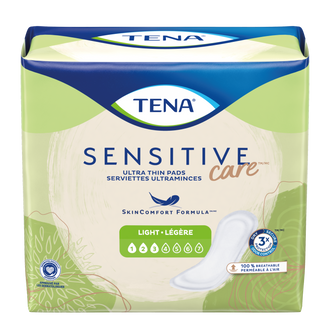
- Use incontinence products for women to help catch unexpected leaks or dribbles.
Around and After Menopause
During this stage, it could be helpful to continue the habits you started in perimenopause while working with your doctor.
Some habits include:
- Seeing your doctor regularly for bone, cholesterol, and blood pressure checks.10
- Speaking to your doctor about persistent vaginal dryness, bladder changes, or recurrent UTIs.10
- Continuing regular weight-bearing and aerobic exercise.10
- Continuing pelvic floor exercises.5
- Practicing healthy sleep habits to help with sleep disruption.5
- Continue using incontinence products for women if you're experiencing bladder control difficulties.
- Use self-care tips for menopause to help with mental health changes.
FAQ
How Long Does Perimenopause Last?
Perimenopause typically starts in your mid-to-late 40s, with the average age being 47.3,4 It typically lasts four to eight years, but it could last as long as 10 years or more.4
You might notice more symptoms during the final one to two years because estrogen levels drop more sharply during this stage. 7
Once you go 12 consecutive months without a period, menopause begins, and postmenopause follows directly after that.1
When Does Menopause End?
Menopause is a single moment, and what follows is postmenopause, which lasts the rest of your life.1 You might notice your symptoms ease over the years after your final period.10
For some women, this may be around 7 to 10 years, and for others it can last longer.10 While symptoms ease, some like vaginal dryness and bladder changes may persist and may your need attention.10,11
At What Stage Is Menopause the Worst?
Everyone’s menopause experience is unique.2 For some women, the last one to two years before menopause may feel the hardest because estrogen drops more sharply during this time.7
For some, it’s the unpredictability of perimenopause that feels most difficult to manage. Others find the year after their final period more challenging as symptoms can still be around then.19
What Is the Average Age to Finish Menopause?
The average age for menopause in the US is 52.5 But it's still possible to reach it between 45 and 55.
Although women who enter perimenopause earlier may spend a longer time in the transition phase before getting there.5
Can Menopause Symptoms Come Back After They Have Eased?
Symptoms like hot flashes may ease over time or fade away.19 But certain factors could intensify or trigger your symptoms, they include: 20
- Caffeine
- Alcohol
- Spicy food
- Tight clothing
- Stress
Does Exercise Help Reduce How Long Menopause Symptoms Last
Regular aerobic or weight-bearing exercise could help your transition feel easier.2 These exercises could support your bone health, improve your sleep, and help ease mood swings over time.2
Also, while you stay active, training your pelvic floor muscles with regular Kegels could help with bladder changes that come with menopause.8
References
1. Healthline. ‘How Long Do Symptoms of Menopause Last?’. 2024. Accessed 11 September 2024. Available from: https://www.healthline.com/health/menopause/how-long-does-menopause-last
2. Cleveland Clinic. ‘Menopause’. 2024. Accessed 11 September 2024. Available from: https://my.clevelandclinic.org/health/diseases/21841-menopause
3. Marks J. At What Age Does Menopause Start? [Internet]. Healthline. 2024. Available from: https://www.healthline.com/health/menopause/menopause-age
4. Faubion, S. Explaining the stages of menopause [Internet]. Mayo Clinic Press. 2024. Available from: https://mcpress.mayoclinic.org/menopause/explaining-the-stages-of-menopause/
5. Gatta F. A Complete Guide on Menopause [Internet]. WebMD. 2025. Available from: https://www.webmd.com/menopause/menopause-basics
6. Watson S. Perimenopause: Periods Closer Together and Other Menstrual Changes [Internet]. Healthline. 2024. Available from: https://www.healthline.com/health/menopause/perimenopause-periods-closer-together
7. WebMD Editorial Contributors. What Is Perimenopause? [Internet]. WebMD. 2023. Available from: https://www.webmd.com/menopause/guide-perimenopause
8. Ames H. What is the link between perimenopause and an overactive bladder? [Internet]. Medicalnewstoday.com. Medical News Today; 2022 [cited 2026 May 18]. Available from: https://www.medicalnewstoday.com/articles/overactive-bladder-perimenopause#link
9. Scaccia A, Matysiak S. How Long Do Symptoms of Menopause Last? [Internet]. Healthline. Healthline Media; 2024. Available from: https://www.healthline.com/health/menopause/how-long-does-menopause-last
10. Silver N. What Health Changes Might Happen Postmenopause? [Internet]. Healthline. Healthline Media; 2025 [cited 2026 May 18]. Available from: https://www.healthline.com/health/menopause/postmenopausal-health#other-health-effects
11. Genitourinary syndrome of the menopause [Internet]. Royal Devon University Healthcare. Available from: https://www.royaldevon.nhs.uk/media/zf2gviwo/rd-24-070-001-genitourinary-syndrome-of-the-menopause-937-v2.pdf
12. Watson S. What Causes Early Menopause? [Internet]. Healthline. Healthline Media; 2022 [cited 2026 May 19]. Available from: https://www.healthline.com/health/menopause/causes-early#symptoms
13. Avis NE, Crawford SL, Greendale G, Bromberger JT, Everson-Rose SA, Gold EB, et al. Duration of Menopausal Vasomotor Symptoms Over the Menopause Transition. JAMA Internal Medicine [Internet]. 2015 Apr 1;175(4):531. Available from: https://jamanetwork.com/journals/jamainternalmedicine/fullarticle/2110996
14. Martin K. Primary ovarian insufficiency: Symptoms, treatment, and fertility [Internet]. www.medicalnewstoday.com. 2021. Available from: https://www.medicalnewstoday.com/articles/primary-ovarian-insufficiency
15. Premature Ovarian Insufficiency - Leeds Teaching Hospitals NHS Trust [Internet]. Leeds Teaching Hospitals NHS Trust. 2025. Available from: https://www.leedsth.nhs.uk/patients/resources/premature-ovarian-insufficiency/
16. Szeliga A, Calik-Ksepka A, Maciejewska-Jeske M, Grymowicz M, Smolarczyk K, Kostrzak A, et al. Autoimmune Diseases in Patients with Premature Ovarian Insufficiency—Our Current State of Knowledge. International Journal of Molecular Sciences. 2021 Mar 5;22(5):2594.
17. Cristina Laguna Benetti‐Pinto, Soares M, Arantes G, Andréa Prestes Nácul, Daniela Angerame Yela, Carolina A. Premature ovarian insufficiency: A hormonal treatment approach. Revista Brasileira de Ginecologia e Obstetrícia. 2020 Aug 1;42(08):511–8.
18.Menopause [Internet]. 2024. Available from: https://primarycare.northeastlondon.icb.nhs.uk/wp-content/uploads/2025/01/Pathway-Menopause-09_2024.pdf
19. Cleveland Clinic. Postmenopause: Signs, symptoms & what to expect [Internet]. Cleveland Clinic. 2024. Available from: https://my.clevelandclinic.org/health/diseases/21837-postmenopause
20.Mayer Robinson K. What Are Vasomotor Symptoms? [Internet]. WebMD. 2026. Available from: https://www.webmd.com/menopause/menopause-vasomotor-symptoms